
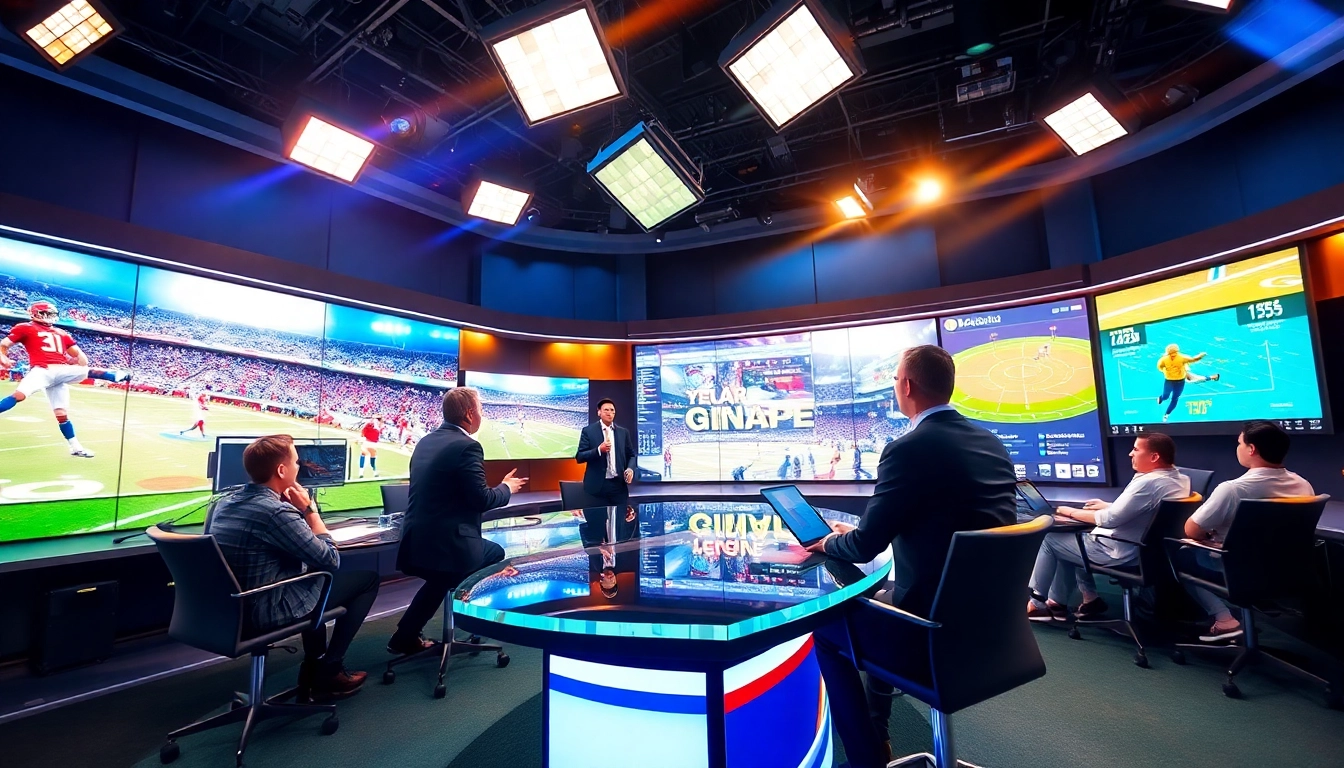
Understanding the Landscape of Sports Broadcasting
The world of Sports Broadcasting has traversed an intriguing path, moving from traditional television programs to an increasingly digital environment. As more fans engage with sports content in innovative ways, understanding this landscape becomes essential for industry professionals and enthusiasts alike. This article delves into the historical context, current trends, challenges, best practices, and future predictions in sports broadcasting, providing a comprehensive overview for those looking to gain insights into this dynamic field.
1. Historical Context of Sports Broadcasting
Sports broadcasting originated in the early 20th century, driven by the desire to connect fans with live events. The first significant broadcast of a sporting event occurred in 1921 when baseball games were aired on the radio. This era marked the beginning of a relationship between sports and media that would evolve dramatically over decades. By the 1950s, television became the primary medium for sports, bringing games directly into viewers' homes and significantly increasing attendance at events.
As cable television emerged in the 1980s, the landscape changed again. Networks started to specialize in sports, leading to dedicated channels like ESPN. The '90s and early 2000s saw a further expansion, as the internet started to provide new ways for fans to engage with sports content, thus laying the groundwork for the current digital age of sports broadcasting.
2. Key Players in the Sports Broadcasting Industry
The sports broadcasting industry is made up of various key players, each playing a vital role in delivering content to audiences. These include:
- Television Networks: Established names like CBS, NBC, and Fox have long been at the forefront, securing broadcasting rights to major sports leagues and events.
- Streaming Platforms: Services such as Amazon Prime Video, Hulu, and DAZN have begun to compete with traditional networks by offering live sports programming, often with innovative features.
- Sports Leagues: Organizations like the NFL, NBA, and UEFA have significant influence over broadcasting rights, often negotiating lucrative contracts with broadcasters and streaming services.
- Advertisers: As a driving force of revenue, advertisers target sporting events as key opportunities to reach viewers, influencing programming decisions.
3. Evolving Technologies and Their Impact
The sports broadcasting landscape is continuously influenced by emerging technologies. High-definition (HD) and ultra-high-definition (UHD) broadcasts have increased viewer experience, while innovations like 4K resolution and 360-degree cameras have changed how fans interact with live sports. Furthermore, advancements in cloud computing and content delivery networks (CDNs) have enabled more reliable streaming services.
On the backend, data analytics tools are increasingly informing production decisions, from camera angles to on-screen graphics, and providing deeper insights into viewer behavior, allowing broadcasters to tailor their offerings to audience preferences.
Current Trends Affecting Sports Broadcasting
1. Rise of Streaming Services in Sports Broadcasting
The proliferation of streaming platforms has revolutionized sports broadcasting. Viewers now prefer on-demand access, allowing them to watch games at their convenience. This shift has forced traditional broadcasters to adapt by creating their own streaming platforms or partnering with existing ones.
As competition intensifies, many streaming services are investing heavily in exclusive rights to coveted sports leagues and events. This trend contributes to changing how rights are bought and sold, as owners weigh the value of traditional versus digital platforms.
2. Interactive Viewing Experiences
To keep viewers engaged, broadcasters are investing in interactive experiences that go beyond simply watching a game. Features like real-time stats, chat forums, multi-camera views, and virtual reality are becoming common. These innovations not only enhance the viewer experience but also provide new opportunities for fan engagement and monetization.
Social media integration is another facet of this trend, with broadcasters encouraging viewers to share their thoughts and reactions, creating a community around the event.
3. Data Analytics in Sports Broadcasting
Data analytics is playing an increasingly significant role in sports broadcasting. By leveraging insights into viewer habits, preferences, and demographics, broadcasters can tailor their content to attract diverse audiences. This data-driven approach allows for more personalized viewing options and targeted advertising, maximizing revenue opportunities.
Moreover, analytics contributes to content improvement, from selecting the best moments for highlight reels to optimizing camera placements based on fan reactions and engagement metrics.
Challenges in Sports Broadcasting Today
1. Viewer Engagement in a Digital Age
Maintaining viewer engagement has become a pressing challenge as competition for attention intensifies. With an influx of content options available online, sports broadcasters must innovate continually to capture and retain viewer interest.
Adopting interactive elements such as polls, live chat, and social media integration can create a sense of community and keep viewers invested, but it requires careful planning and execution.
2. Rights Management and Licensing Issues
Navigating rights management has become increasingly complex due to the variety of platforms available. The territoriality of sports broadcasting rights means that viewers may have to engage with different platforms depending on geographic regions, leading to frustration and potential loss of viewership.
Broadcasters must invest in legal expertise to manage these complexities while negotiating more flexible licensing agreements that accommodate the established streaming landscape.
3. Adapting to Changing Consumer Preferences
Today's consumers are more informed and selective than ever. Sports broadcasters must adapt to evolving preferences, which increasingly favor personalized content and diverse viewing options. Failure to meet these expectations can result in decreased viewership and revenue.
Staying ahead requires ongoing research into viewer habits as well as willingness to experiment with new formats and delivery systems.
Best Practices in Sports Broadcasting
1. Enhancing Viewer Experience Through Technology
Investing in technology that enhances the viewing experience is paramount for sports broadcasters. Providing options such as multi-language commentary, interactive graphics, and augmented reality features can set broadcasters apart.
Moreover, optimizing platforms for mobile devices is crucial, as more fans consume content on smartphones and tablets. Embracing new technologies is a vital part of maintaining a competitive edge in the field.
2. Utilizing Social Media for Engagement
Leveraging social media to promote live events and engage with viewers in real time can create a vibrant community around a broadcast. Broadcasters should share behind-the-scenes content, run contests, and interact with fans to increase visibility and participation.
Utilizing platforms like Twitter, Instagram, and TikTok helps maximize reach and attract diverse audiences, further driving engagement and loyalty.
3. Building Brand Loyalty in Sports Broadcasting
Building brand loyalty in sports broadcasting involves creating a distinct brand identity and nurturing a connection with viewers. Consistency in delivering high-quality content, excellent customer service, and exclusive perks can significantly enhance brand perception and viewer retention.
Through fan-focused initiatives, loyalty programs, and personalized content, broadcasters can create lasting relationships with audiences that enhance long-term success.
Future Predictions and Innovations in Sports Broadcasting
1. The Role of AI and Automation
Artificial intelligence (AI) is expected to play a transformative role in sports broadcasting. From producing highlights automatically to personalizing viewer experiences, AI has vast potential in streamlining operations and enhancing content delivery.
Moreover, AI-driven insights can help broadcasters make informed decisions about programming, marketing strategies, and audience engagement approaches, ultimately leading to better performance and profitability.
2. Integrating VR/AR Into Sports Broadcasting
The integration of virtual reality (VR) and augmented reality (AR) into sports broadcasting is poised to offer unparalleled experiences. By allowing viewers to experience games as if they were present, VR can provide a level of immersion previously unavailable.
AR can enrich live broadcasts with real-time data overlays and player statistics, enhancing the overall viewing experience. As these technologies advance, they will redefine how fans consume sports content.
3. Sustainability and Ethics in Sports Broadcasting
As environmental concerns become more pronounced, sustainability in sports broadcasting is gaining attention. Broadcasters are increasingly focusing on eco-friendly practices, from energy-efficient equipment to reducing waste during events.
Ethical considerations are also coming to the forefront, including transparent practices regarding data usage and sponsorships. Emphasizing these values can resonate well with today's socially conscious viewers and enhance a broadcaster's reputation.
FAQs
1. What are the primary platforms for sports broadcasting?
Sports broadcasting takes place on various platforms, including traditional TV networks, cable channels, and online streaming services. Each platform caters to different audience preferences and demographics.
2. How has streaming impacted traditional sports broadcasting?
Streaming services have altered the sports broadcasting landscape by providing on-demand access and flexibility. They have shifted viewer expectations, compelling traditional broadcasters to adopt new technologies.
3. What role does social media play in sports broadcasting?
Social media enhances viewer engagement by offering real-time interaction and community-building opportunities. Broadcasters utilize it for marketing events and fostering fan interaction.
4. What innovations are expected in sports broadcasting?
Future innovations include AI-driven content creation, integration of VR/AR for immersive experiences, and enhanced interactive features that elevate viewer engagement and satisfaction.
5. What challenges do sports broadcasters face today?
Sports broadcasters face challenges such as maintaining viewer engagement in a crowded market, navigating rights management complexities, and adapting to changing consumer preferences.